

The most
brain-changing thing in your room is a song

Musical play does extraordinary things for the developing brain. We teach the grown-ups in children’s lives to use it with intention, backed by brain science and a tonne of joy.
We train educators to use music as a daily teaching tool. Not a performance or a time-filler, AND definitely not the thing you squeeze into the five minutes before lunch.
Solid science and hands-on skills to deepen connection with your children and strengthen your impact during the years that matter most. The difference shows up in your rooms within weeks.

Why music?
The fluffy bit?
Yeah, nah.
Music is the foundation for everything else.
Build the early years on rhythm, song, and musical play, and everything that comes later - language, literacy, friendships, big school - has something sturdy to stand on.
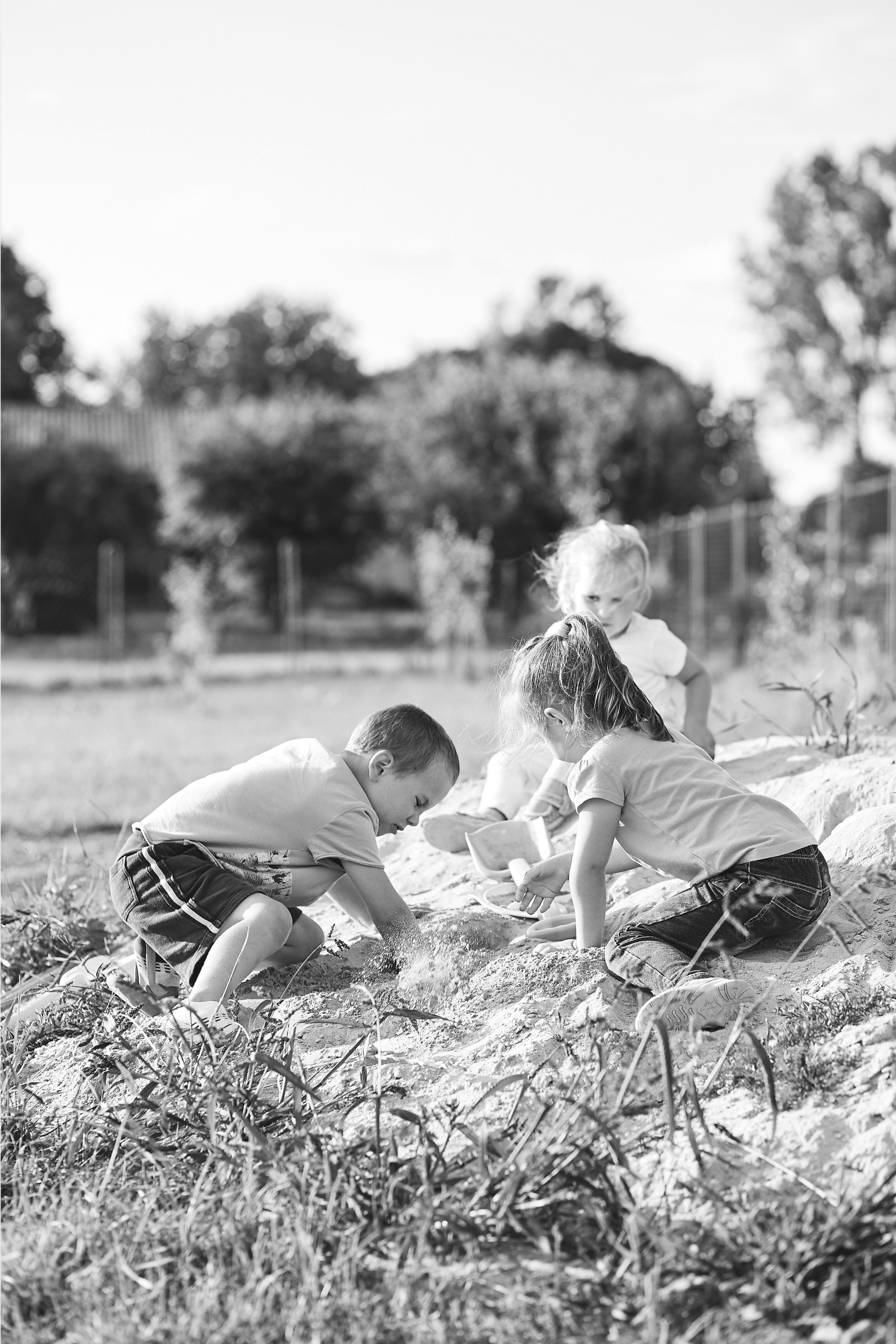
Active music making may look like a silly song about a wombat that poops. You hear pot banging and rattle shaking. There are wiggles and giggles and many happy little Vegemites.
But underneath all that chaos, whole-brain development is having an absolute field day: regulation, connection, communication, executive function, confidence, school readiness, and a strong sense of self, all growing at once.
Educators notice it first, then the families. The kids just feel it.
REGULATE
CONNECT
THINK
EXPRESS
REGULATE CONNECT THINK EXPRESS
Everything we create is grounded in four things every child deserves to thrive in, and every adult can learn to support.
regulate
Children learn best when their nervous systems feel safe.
Rhythm, repetition, breath, movement, and predictable musical cues build that safety, settling a room down or lifting it up — for the children and the adults beside them.
connect
Relationships come first, always.
Music creates moments of shared attention and belonging, especially for children who find words, groups, transitions, or big feelings tricky.
A song can be an invitation, a rhythm a bridge, a silly sound the doorway in.
think
Music is packed with pattern, prediction, memory, sequencing, and impulse control.
In other words, it’s executive function practice wearing a sparkly hat.
Children rehearse the foundations of learning in ways that feel joyful and embodied, with no worksheets within cooee.
express
Every child needs ways to show who they are, what they feel, and what they need.
Music gives them a voice before they have all the words, and helps older children trust the voice they already have.
the difference you’ll feel
When music is used with intention, it changes the whole atmosphere.
Rooms feel calmer and transitions stop being a battle. Educators feel more resourced instead of run ragged.
Children find more ways to be a part of the group, to learn, to relate to each other. Families see joyful, intentional practice in action and tell everyone they know.
None of this is magic and none of it requires a beautiful singing voice. It happens because children aren’t data points, educators aren’t machines, and music is not decoration. It’s development in disguise.
The most brain-changing thing in the room.
shaping childhoods
We support the adults and organisations around children - the people doing the beautiful,
exhausting, wildly important work of helping young humans become themselves.
Professional development
Mentorship, masterclasses, courses
and, workshops for Early Years Educators
Musical immersion training for early childhood centres that want capable educators, supported children, and confident families.
Speaking programs
Primary years programs supporting Year 5–6 students to develop confidence, voice, and presence. Using play and brain science.
family connection
The Family Music Club is a video library of music-making sessions for babies through to young primary kids, ready to play anywhere, any time.
Frequently Asked Questions
-
We support the adults and organisations around children:
Early learning centres and their leadership teams
Early childhood educators
Primary schools
Parents, carers, and parent associations
School readiness teams
Sector partners like TAFE, universities, and councils
If your work supports children, families, or educators, we’d probably have a lot to talk about. Possibly with coffee. Definitely with neuroscience. Let’s chat.
-
Nope. We support educators of all levels of musicality and they don’t need a scrap of ‘musical experience’ to get started with Sounds Like This.
No perfect singing voice required, no fancy instruments, no prior music training.
Our programs are built for everyday educators!
We teach practical tools and the clear science behind them, so the team can use music confidently with the voice and the resources they already have.
-
We teach the why, not just the what. Every song, game and strategy we share is grounded in the neuroscience of the developing brain, so educators understand exactly what each activity is doing and can adapt or scaffold it with confidence instead of copying a routine. It's evidence-based, play-based and built for real rooms.
Depending on the program, that learning happens live on your floor, online at your own pace, or both.
-
Absolutely! Our work is built to strengthen the frameworks you already run, not add another one on top.
Our programs strengthen EYLF-aligned practice and sit alongside what your educators have already planned, rather than replacing any of it. When our Music Practitioners bring the music into the rooms where your team already teaches, the regulation, connection, and language children build through music making feed straight into the learning outcomes you're working towards anyway.
And because the music becomes part of everyday practice rather than a one-off visit, it gives you real evidence for the NQS that feeds straight into your Assessment & Rating: educator capability visibly growing and children’s learning visibly richer. It also supports your Quality Improvement Plan across educational program and practice, children's wellbeing, and relationships with children.
-
Yes. Child safety is built into how we work.
Every Music Practitioner holds a current Working With Children Check, and from the moment we walk in, we work under your centre's own child safety policies and code of conduct.
Because our whole model has a Practitioner working alongside your educators in their own rooms, your team stays right there the entire time. Our people are never alone with children. The educators your families already trust are in the room, making the music with us.
-
Our approach doesn’t stop at the early years door.
We support primary educators with everyday music and rhythm tools (especially in the Foundation years), while our Sounds Like Speaking program helps Year 5–6 students build confidence, voice, and presence before the leap to high school.
-
We’re Melbourne-based and deliver in-person programs across the city, with online learning available anywhere, any time.
-
Get in touch with our administrative team. We’d love learn more about your specifc setting and to support you through brain-changing musical experiences.
Got questions: Sing out!